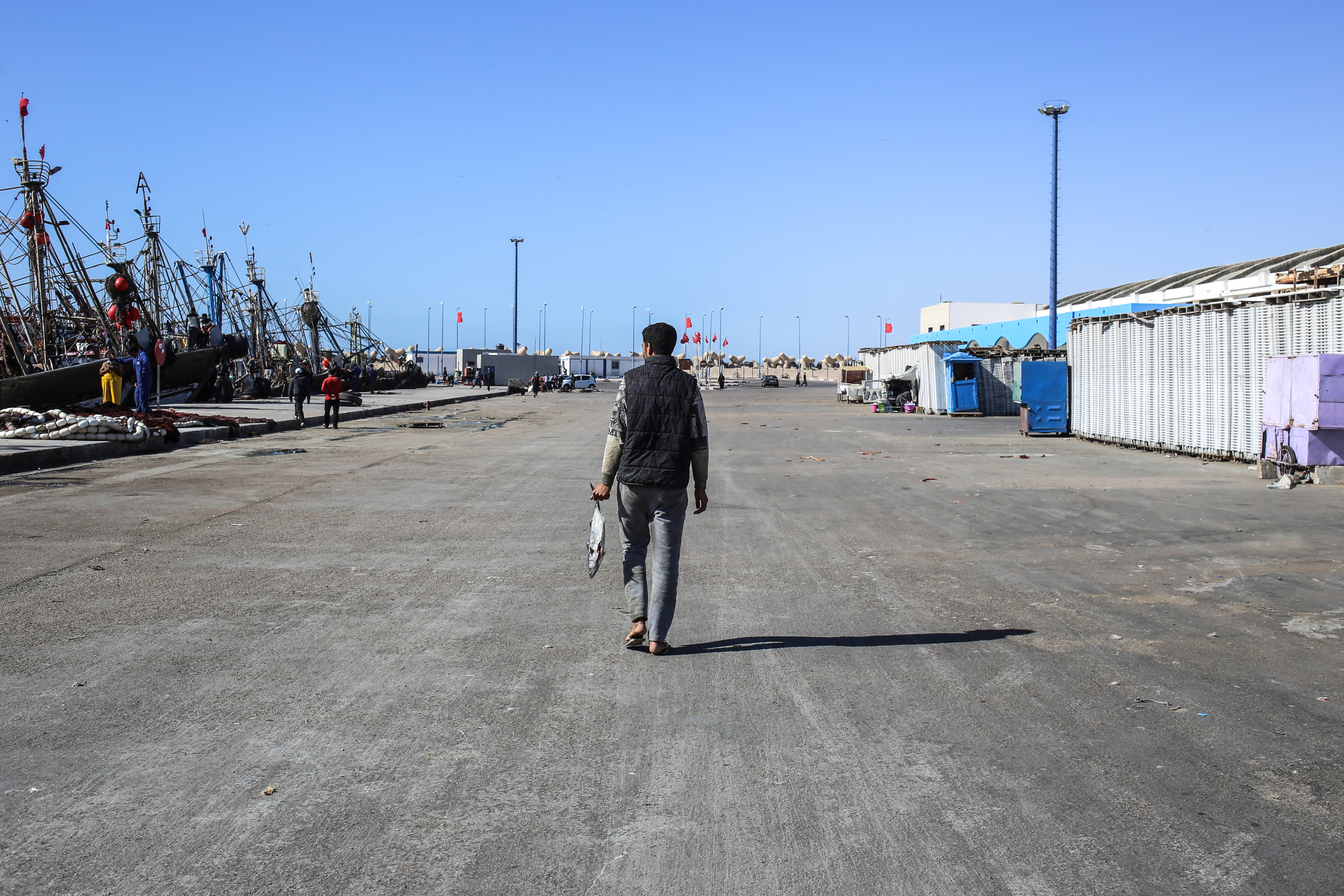
International certification standards embellish Morocco’s controversial trade with fisheries and agricultural products in occupied Western Sahara, new report documents.
Photo: Elli Lorz.
European consumers trust certification labels to signal responsible production. A new report published today by Western Sahara Resource Watch (WSRW) documents that when it comes to production in occupied Western Sahara, these labels in fact do the opposite.
Across Europe, supermarket shelves are stocked with tomatoes and canned sardines carrying respected certification labels. Behind these labels lies a system that helps Moroccan companies operating on occupied land pass as “responsible”, while concealing violations of international law, EU court rulings, and basic truth about product origin.
This investigation documents how dozens of international standards and certification bodies enable Moroccan firms in occupied Western Sahara to access the EU market under false country-of-origin claims. Products from a territory that is legally separate and distinct from Morocco are routinely certified, registered and marketed as “Moroccan”. What EU law defines as mislabelling - and in some cases Food Fraud - is built into the certification system itself.
Download the report ‘Certified Occupation’ here
The business model is simple: Moroccan exporters pay for certificates. Certification bodies issue them. Standard owners license them. Everyone gets paid - and when problems emerge, everyone points elsewhere. Auditors blame standards. Standards blame auditors. Both depend financially on the companies they are supposed to oversee.
Accountability is virtually absent. Almost no one answers questions. None of the 60-odd companies named in this report responded when asked whether they accept that Western Sahara is not part of Morocco.
Certification schemes that claim to prevent Food Fraud actively reproduce false geographical information in their databases and certificates. Even schemes that advertise protection against mislabelling lead European retailers straight into illegality by presenting Western Sahara as part of Morocco. Retailers, importers and consumers are systematically misled.
Only two actors broke with this pattern. The Aquaculture Stewardship Council (ASC) decided to exit Western Sahara entirely, acknowledging the territory requires heightened human-rights due diligence it cannot guarantee. The certifier LSQA also withdrew. All others either defended their practices or remained silent.
The legal framework is clear. Under international law, the people of Western Sahara - not Morocco - hold sovereign rights over the territory and its natural resources. Ten rulings from the EU Court of Justice confirm that Western Sahara is not part of Morocco, that Saharawi consent is required for economic activity, and that products from the territory must be labelled as such. Certification schemes ignore these rulings at the point where they matter most: on the certificate itself.
Until certification schemes stop certifying occupied land as if it were sovereign Morocco, consumers should treat their labels with extreme caution. If a certification body cannot even state where a facility is geographically located, every other sustainability claim collapses with it.
Products carrying labels such as GlobalG.A.P., GMP+, MarinTrust, Friend of the Sea, FSSC 22000, BRCGS, IFS Food or AWS cannot be assumed to be responsibly produced.
In short: what is marketed as “sustainability” or “safety” or “responsibility” today is, in Western Sahara, a compliance theatre that disguises occupation, normalises illegality and launders contested resources into European supply chains.
Since you're here....
WSRW’s work is being read and used more than ever. We work totally independently and to a large extent voluntarily. Our work takes time, dedication and diligence. But we do it because we believe it matters – and we hope you do too. We look for more monthly donors to support our work. If you'd like to contribute to our work – 3€, 5€, 8€ monthly… what you can spare – the future of WSRW would be much more secure. You can set up a monthly donation to WSRW quickly here.

Certification giant SGS points fingers elsewhere
SGS blames everyone else for mistakes on MarinTrust certificates it had issued to Moroccan companies in occupied Western Sahara.
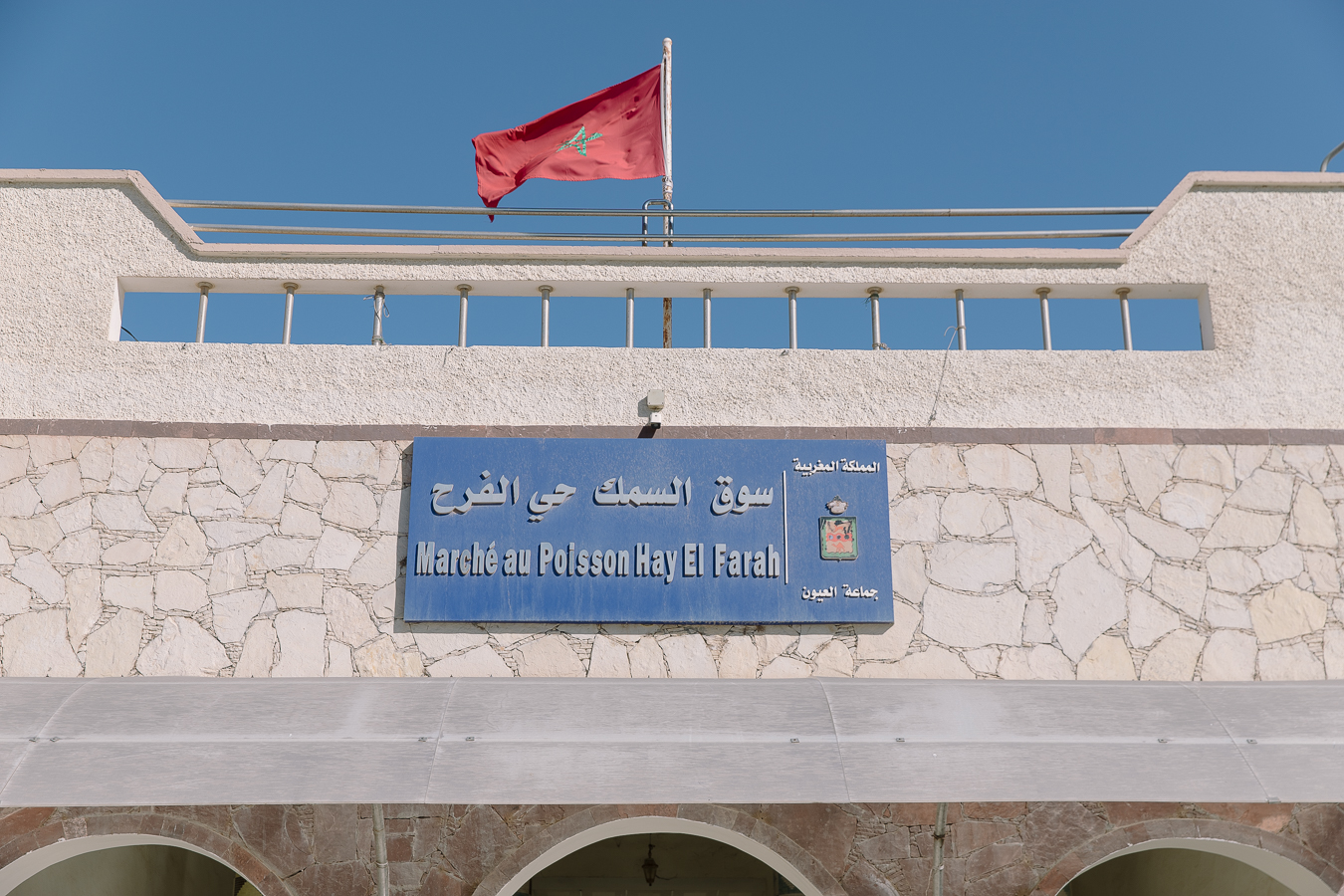
GMP+ does not check if “sustainable” fish is legally caught
The world’s largest certification scheme for “safe and sustainable animal feed” does not check whether its certified fish feed companies source from illegal fisheries in occupied Western Sahara, where catches violate the Saharawi people’s right to self-determination.
ASC withdraws from occupied Western Sahara
Certification scheme ends involvement with Azura Group and declares that no future certifications will be granted to companies in the occupied territory.
Azura dives deep into politics
The French-owned Azura Group, a producer of agricultural and aquaculture products in occupied Western Sahara, has taken a remarkably political stance - openly praising Morocco’s “national cause” and “territorial integrity.”